How should I read shielding effectiveness figures, and how are they confirmed?
Shielding effectiveness in dB is the difference between the power received without the enclosure and with it; higher is better. Manual, pneumatic, and drawer enclosures work on the same principle — conductive continuity of the metal shell plus skin effect — so effectiveness comes from the material, seam sealing, openings, and feed-through treatment, not from the lid mechanism. Common industry bands are 60–80 dB for development and production work, and 80–100 dB or more for accredited labs. Leakage comes from seams, openings, cable penetrations, and aged gaskets. Measurements typically follow IEEE 299, IEEE 299.1, or GB/T 12190.
Key points
- SE = received power without enclosure minus received power with it, in dB
- Lid mechanism does not change shielding; seams, openings, and feed-throughs do
- 60–80 dB for development and production, 80–100 dB or more for accredited labs
- Ageing gaskets are a common cause of gradual degradation
- Verify against IEEE 299 / 299.1 / GB/T 12190 and the delivered test report
Products this applies to
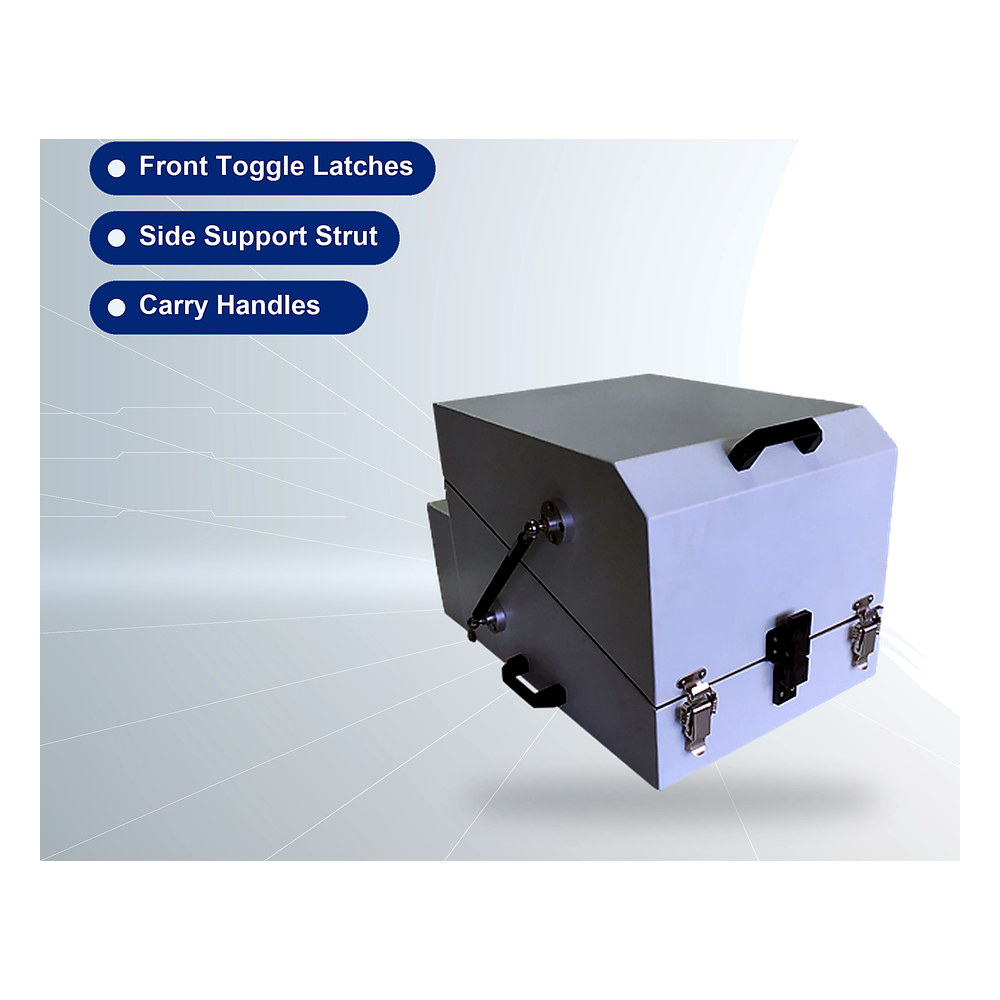
Discuss this configuration
Send the device details and the measurement you need to make. We will confirm which specifications are fixed and which need verification on your sample.
Contact engineering